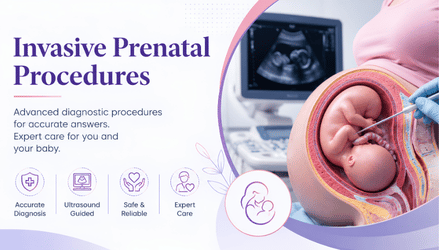
Advanced Diagnostic & Therapeutic Fetal Procedures
At Sattva The Fetal Medicine Centre, we provide specialized Invasive Prenatal Procedures for the diagnosis and management of complex fetal conditions and high-risk pregnancies. Using advanced ultrasound guidance and evidence-based maternal-fetal medicine practices, our specialists perform precise fetal procedures while prioritizing the safety and well-being of both mother and baby.
What are Invasive Prenatal Procedures?
Invasive Prenatal Procedures are specialized diagnostic and therapeutic interventions performed during pregnancy to obtain important information about your baby's health or to treat certain fetal conditions before birth. These procedures are recommended only when medically indicated after careful clinical evaluation, genetic counselling, and detailed fetal assessment.
All procedures are performed under continuous high-resolution ultrasound guidance by experienced Maternal & Fetal Medicine specialists, ensuring maximum precision, safety, and the best possible care for both mother and baby throughout the procedure.
Advanced prenatal diagnostic and therapeutic interventions performed under expert medical guidance.
A prenatal diagnostic procedure collecting amniotic fluid for genetic and chromosomal analysis to identify conditions like Down syndrome.
An early prenatal diagnostic procedure collecting placental tissue during the first trimester for rapid genetic testing.
A specialized fetal therapy transfusing blood to the baby under precise ultrasound guidance to treat severe anemia.
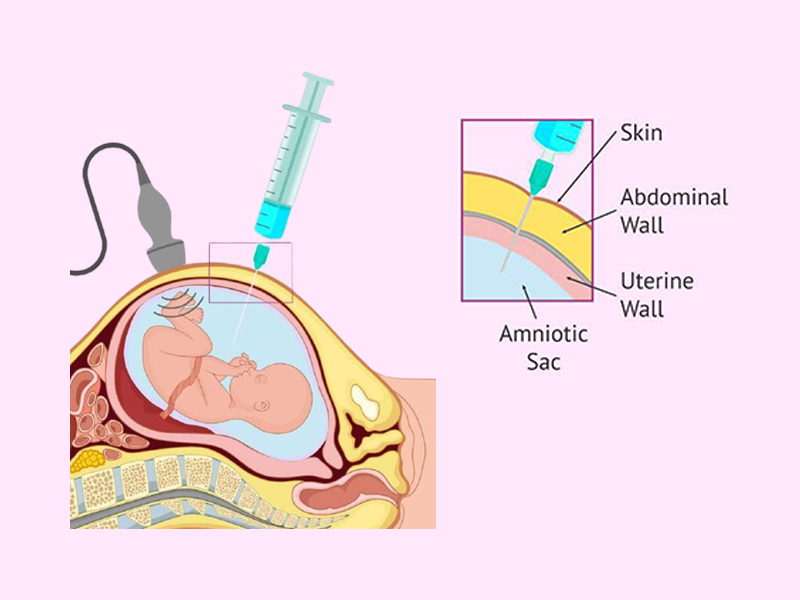
A specialized medical procedure used to remove excess amniotic fluid, relieving maternal symptoms caused by severe polyhydramnios.
A highly specialized procedure managing complex multi-fetal pregnancies to safely improve overall maternal and neonatal medical outcomes.
Invasive prenatal procedures are recommended only when there is a clear medical indication. They provide accurate diagnostic information, guide treatment decisions, and help optimize outcomes for both mother and baby.
At Sattva The Fetal Medicine Centre, every prenatal diagnostic procedure is performed with meticulous planning, advanced ultrasound guidance, and compassionate care. Our Maternal & Fetal Medicine specialists ensure your safety and comfort while providing accurate diagnosis and comprehensive pregnancy support throughout the process.
Our specialists review your pregnancy history, previous ultrasound findings, screening reports, and medical indications to determine whether an invasive prenatal procedure is appropriate.
You receive detailed counselling about the procedure, including its purpose, benefits, possible risks, expected outcomes, and available alternatives, allowing you to make an informed decision.
The selected procedure, such as Amniocentesis, CVS, Cordocentesis, or another fetal intervention, is performed under continuous high-resolution ultrasound guidance for maximum precision and safety.
Following the procedure, both mother and baby are carefully monitored to ensure stability. You will receive post-procedure instructions before returning home.
Regular follow-up appointments, ultrasound examinations, and ongoing pregnancy monitoring are scheduled to review results and ensure continued maternal and fetal well-being.
Find answers to common questions about invasive prenatal diagnostic procedures, fetal interventions, and maternal-fetal care at Sattva The Fetal Medicine Centre.
Yes. These procedures are performed only when medically indicated by experienced Maternal & Fetal Medicine specialists under continuous ultrasound guidance. Before the procedure, your doctor will explain the expected benefits, possible risks, and available alternatives to help you make an informed decision.
Most invasive prenatal procedures are performed as day-care procedures, allowing you to return home the same day. However, short-term observation may be recommended depending on your medical condition and the type of procedure performed.
Most women experience only mild discomfort during the procedure. Local anesthesia or appropriate pain management may be used when necessary to ensure your comfort.
Most patients can resume light daily activities within 24–48 hours. Your specialist will provide personalized post-procedure instructions and advise you on any activity restrictions.
Yes. Follow-up ultrasound examinations and regular pregnancy monitoring are important after the procedure to assess maternal recovery, fetal well-being, and ongoing pregnancy progress.